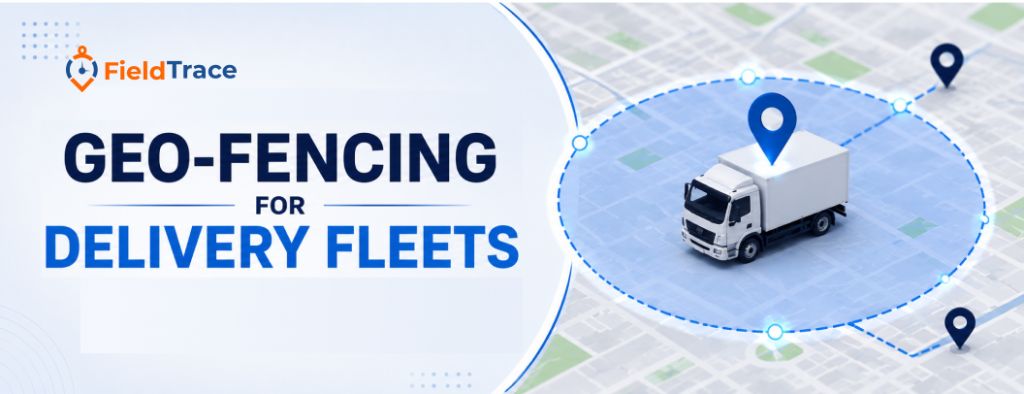
Delivery fleets have one burning question: Where is the shipment right now? And nothing answers better than a live pin powered by Geo-Fencing. Industry research shows that geo-fencing for delivery fleets drives a 15% improvement in job completion rate, driven by smarter dispatching, automated alerts, and zero guesswork on the ground.
But real-time visibility is just the beginning. Geo-Fencing also automates the critical workflows that follow every delivery: from auto-detecting arrivals to generating digital proof of delivery. That means-
- Eliminate manual check-ins
- Reduce delivery disputes
- Improve fleet productivity
- Capture location-backed delivery proof automatically
Let’s dive deeper into the blog and understand how geo-fencing automates proof of delivery in fleets, without the burden of extra hardware.
What is Geo-Fencing in Fleet Management?
In a software application, geo-fencing refers to usage of GPS, the Global Positioning System, to define precise geographical boundaries. Acting as a virtual barrier, a geo-fenced app responds to the moment a mobile device enters or exits its perimeter.
In delivery & logistics operations, geo-fencing can be used to:
- Detect fleet arrivals and departures automatically
- Monitor adherence to assigned delivery routes
- Track unauthorized stops or route deviations
- Generate real-time alerts for dispatch teams
- Record delivery events without manual intervention
For delivery businesses, geo-fencing acts as a digital checkpoint system that continuously monitors field movements using smartphone GPS data.
This continuous, location-aware intelligence is what makes geo-fencing the backbone of automated proof of delivery. It replaces paperwork and manual confirmation with timestamped, GPS-verified delivery records.
What is Proof of Delivery (POD) and Why Does It Matter?
Completing a delivery in operations is not just about reaching the destination; it is about proving that the right package reached the right customer at the right time. This is where Proof of Delivery (POD) plays a critical role.
Introducing Proof of Delivery (POD)
In fleet management, automated proof of delivery refers to a confirmation record that verifies a shipment’s successful delivery to the intended recipient. It serves as documented evidence between the sender, delivery company, and customer that the delivery was completed.
Traditionally, POD was collected through paper-based methods such as customer signatures on delivery receipts. Today, modern delivery fleets use digital POD solutions that capture delivery details instantly through mobile apps and fleet management systems.
A proof of delivery software must include:
- Customer signature
- Delivery timestamp
- GPS location of delivery
- Photo proof of delivered package
- Recipient details
- Delivery notes
- Barcode or QR code scans
- Driver information
This creates a reliable digital trail for every delivery transaction.
Why Is Proof of Delivery Non-Negotiable for Delivery Fleets?
Dispute Resolution
Without documented proof, a delivered status means nothing if a customer claims otherwise. POD provides timestamped, location-verified evidence that protects the business from false non-delivery claims.
Customer Trust
Customers expect transparency. A verifiable delivery confirmation, shared in real time, builds confidence in the fleet’s reliability and reduces follow-up calls to support teams.
Operational Accountability
POD creates a clear audit trail for every delivery agent. Managers can verify not just if a delivery happened, but where and when, eliminating guesswork from performance reviews.
Billing and Compliance
For businesses billing per delivery or operating under SLA commitments, POD is the primary evidence for invoicing and regulatory compliance.
Fraud Prevention
Fake deliveries, marked complete without reaching the customer, cost businesses significantly. Location-backed POD makes it nearly impossible to log a delivery that did not happen.
Why Are Hardware-Based Tracking Systems Holding Fleets Back?
For years, businesses have relied on dedicated GPS devices and vehicle-mounted trackers for fleet monitoring. While these systems offer basic visibility, they are increasingly proving to be expensive, rigid, and difficult to scale, especially in today’s fast-moving delivery & logistics operations.
Rising Costs
Conventional tracking solutions require significant upfront investment in GPS devices, installation, maintenance, and replacements. As fleets expand, these costs rise proportionally, making hardware-heavy systems less sustainable.
Complex Deployment & Maintenance
Installing and managing physical devices across dozens or hundreds of vehicles is operationally demanding. Device failures, battery issues, and maintenance downtime can disrupt critical tracking activities and affect delivery performance.
Limited Flexibility for Field Teams
Several businesses today operate with mixed fleets, third-party carriers, and on-demand delivery personnel. Deploying dedicated hardware for every resource is often impractical, making field employee tracking much more challenging.
Delayed Proof of Delivery
Hardware-based systems typically focus only on vehicle location and often fail to capture comprehensive delivery evidence. As a result, teams still depend on manual updates, paperwork, or customer signatures to validate deliveries.
Difficult to Scale
As delivery volumes increase, adding new vehicles usually means purchasing and configuring additional devices. In contrast, modern delivery fleet management software enables businesses to onboard new drivers instantly through mobile applications.
This is why several organizations are shifting toward software-driven solutions that provide GPS proof of delivery without hardware, combining real-time tracking, automation, and automated POD within a single platform.
How Does Geo-Fencing Automate Proof of Delivery?
Geo-fencing for delivery fleets works by logging vehicle entry and exit at each stop automatically, removing the dependency on manual check-ins, phone confirmations, or paperwork that delivery teams have relied on for years.
Here’s how it works:
Create Virtual Delivery Zones
Operations managers define geo-fences, virtual boundaries around customer locations, warehouses, retail outlets, or service sites, within the fleet management software.
Assign Deliveries to Field Teams
Delivery executives receive their assigned tasks through a mobile application. The system continuously enables field employee tracking for delivery using the smartphone’s built-in GPS.
Detect Arrival Automatically
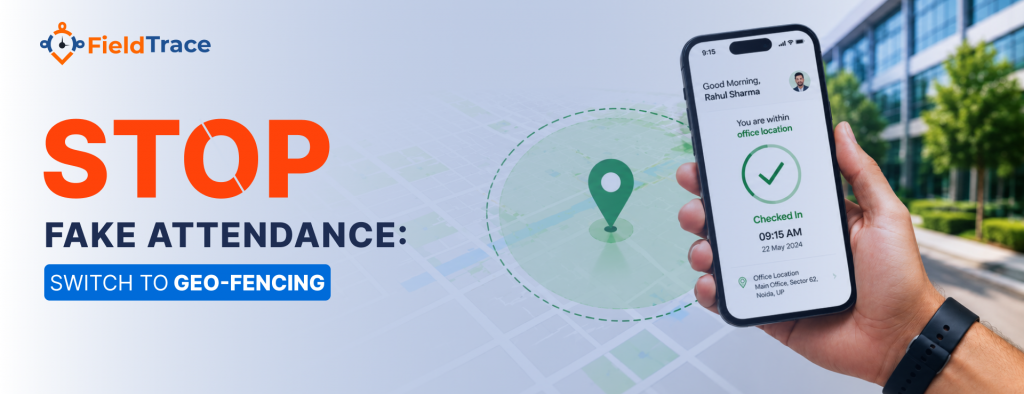
As soon as a delivery executive enters the predefined geo-fence, the system automatically records the arrival time and exact GPS coordinates, eliminating the need for manual check-ins.
Capture Delivery Completion
Once the delivery is completed, the application can automatically generate a digital record containing:
- Arrival and departure timestamps
- GPS location details
- Delivery photos
- Customer acknowledgements or signatures
- Notes and task updates
Generate Instant Proof of Delivery
All captured information is instantly consolidated into a secure digital record, creating automated proof of delivery that can be accessed anytime by managers, dispatchers, or customer support teams.
With geo-fencing, delivery confirmations happen automatically the moment a driver reaches the designated location, ensuring greater accuracy, faster reporting, and complete operational visibility.
Key Benefits of Geo-Fencing for Delivery Fleets
Evolved from just a tracking feature to becoming a strategic tool for modern delivery operations, geo-fencing has come a long way. By automating location-based activities, businesses can improve efficiency, accountability, and customer satisfaction across the entire delivery lifecycle.
Real-Time Operational Visibility
Managers gain complete visibility into the whereabouts of delivery personnel and the status of every shipment, enabling faster decision-making and proactive issue resolution.
Faster and More Accurate Deliveries
Geo-fencing helps ensure that deliveries are made at the right location and at the right time. Automated location verification minimizes errors and improves overall delivery accuracy.
Reduced Manual Effort
Automated check-ins, arrival detection, and delivery confirmations significantly reduce paperwork and manual updates, allowing delivery teams to focus on completing more tasks.
Lower Operational Costs
By eliminating dependency on dedicated tracking devices and reducing administrative overhead, businesses can optimize operational expenses while scaling their delivery network.
Improved Accountability
Location-backed activity records provide clear visibility into field operations, helping businesses verify completed deliveries, monitor route adherence, and address discrepancies effectively.
Enhanced Customer Experience
Real-time delivery updates and accurate proof of delivery build customer confidence, reduce disputes, and improve overall service quality.
Detailed delivery records and location insights help organizations identify inefficiencies, measure team performance, and continuously optimize their delivery processes.
Industries That Are Already Winning with Geo-Fencing
The ability to automate location verification and delivery confirmation makes geo-fencing valuable across multiple industries.
Delivery & Logistics Operations
Courier companies, e-commerce businesses, and third-party logistics providers can automatically verify deliveries, monitor route adherence, and maintain complete visibility over fleet movements.
Service & Maintenance Operations
Organizations managing field technicians can automatically record site visits, track service durations, and verify task completion without relying on manual check-ins.
FMCG & Distribution
Distributors can ensure that sales representatives and delivery personnel visit the right outlets, complete deliveries on time, and maintain accurate records of every interaction.
Healthcare & Pharmaceutical Supply Chains
Healthcare providers and pharmaceutical distributors can track critical deliveries, validate drop-offs, and maintain auditable delivery records for compliance purposes.
Field teams responsible for installations, inspections, and maintenance can automatically log arrivals and departures at customer sites, improving accountability and service quality.
How Does FieldTrace Enable Hardware-Free Delivery Tracking?
FieldTrace empowers organizations to digitize and automate delivery operations without investing in dedicated GPS hardware. By leveraging smartphone-based location intelligence, businesses can gain complete visibility into field activities while keeping operational costs under control.
With FieldTrace, businesses can:
- Create geo-fences around customer locations, warehouses, and service sites.
- Track delivery personnel in real-time through a centralized dashboard.
- Automatically record arrivals and departures based on predefined geo-fences.
- Capture digital proof of delivery with timestamps, GPS coordinates, photos, and task updates.
- Monitor route adherence and identify deviations instantly.
- Access detailed reports and historical delivery records for audits and performance analysis.
Whether managing delivery executives, service technicians, or distributed field teams, FieldTrace helps organizations streamline operations, improve accountability, and ensure every delivery is backed by accurate location data.
Frequently Asked Questions
How does geo-fencing improve proof of delivery?
Geo-fencing automatically verifies when a delivery executive reaches the designated customer location, creating accurate, location-backed delivery records without manual intervention.
Do businesses need additional GPS devices to use geo-fencing?
No. Modern field tracking solutions use the GPS capabilities available in smartphones, eliminating the need for dedicated tracking hardware.
Can geo-fencing help reduce delivery disputes?
Yes. Since every delivery is supported by location data, timestamps, and other digital records, businesses can quickly resolve disputes and improve customer trust.
Which industries can benefit from geo-fencing?
Industries such as logistics, courier services, FMCG distribution, healthcare, utilities, telecom, and field service operations can significantly benefit from geo-fencing technology.
Is geo-fencing suitable for small and growing businesses?
Absolutely. Geo-fencing is highly scalable and allows businesses to expand their field operations without incurring significant hardware or infrastructure costs.